Description
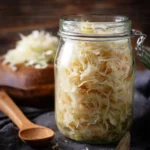
This recipe guides you through the process of making delicious fermented cabbage, also known as sauerkraut.
Ingredients
Scale
- 2 pounds heads of cabbage (1–2 heads)
- 20 grams mineral or sea salt (not iodized) based on 1000 grams of cabbage
Instructions
- Set aside 2 cabbage leaves and leave them whole.
- Shred the remaining cabbage finely with a sharp knife or mandolin.
- Weigh the cabbage in grams (careful not to include the bowl’s weight).
- Take the weight of the cabbage and multiply it by the required grams per 1000 grams to measure out the salt needed.
- Massage the measured salt into the cabbage. Let sit for 30 minutes, or longer if needed to extract more juices.
- Transfer cabbage and brine to your vessel and pack tightly with a tamper or a muddler.
- Leave 3 inches of space between brine level and the top of the jar. Top with one or two cabbage leaves to keep shreds from floating above the brine, adding a fermentation weight.
- Keep the jars at room temperature (65-72F is ideal). Check progress daily, ensuring cabbage is still submerged (push it down if not) and taste for doneness starting day 3.
- It will generally take anywhere from 3-5 days and will get sourer as it ferments.
- You will know it is adequately fermented when it looks lighter in color, with a pleasantly tangy flavor.
- Store in the refrigerator with a sealed lid. To create a bubbly kraut, burp occasionally.
Notes
- The amount of salt needed varies based on the weight of the cabbage used.
- Monitor fermentation closely to achieve the desired flavor and texture.
- Prep Time: 15 minutes
- Category: Preserving
- Method: Fermentation
- Cuisine: German
Nutrition
- Serving Size: 1/2 cup
- Calories: 20
- Sugar: 1g
- Sodium: 300mg
- Fat: 0g
- Saturated Fat: 0g
- Unsaturated Fat: 0g
- Trans Fat: 0g
- Carbohydrates: 4g
- Fiber: 2g
- Protein: 1g
- Cholesterol: 0mg